
The Venus E 3.0 stands out because it makes a meaningful home-battery capacity approachable without positioning itself as a traditional fixed installation. Its 5.12 kWh LFP pack, 2.5 kW AC path and smart-meter-led self-consumption mode make sense for solar households and dynamic tariffs. The main caveat is not the battery: it is the electrical context. Confirm compatibility, backup wiring and local connection rules before treating it as a whole-home solution.
Pros
- Useful 5.12 kWh starting capacity for solar shifting and essential loads
- 2.5 kW AC input and output in a compact all-in-one format
- Smart-meter mode targets self-consumption and can limit export
Cons
- 2.5 kW is not enough for every heavy appliance or whole-home scenario
- Real-world suitability depends on electrical compatibility and local rules
- A plug-and-play promise does not remove the need to understand backup circuits
What it is
A home battery designed to lower the entry barrier
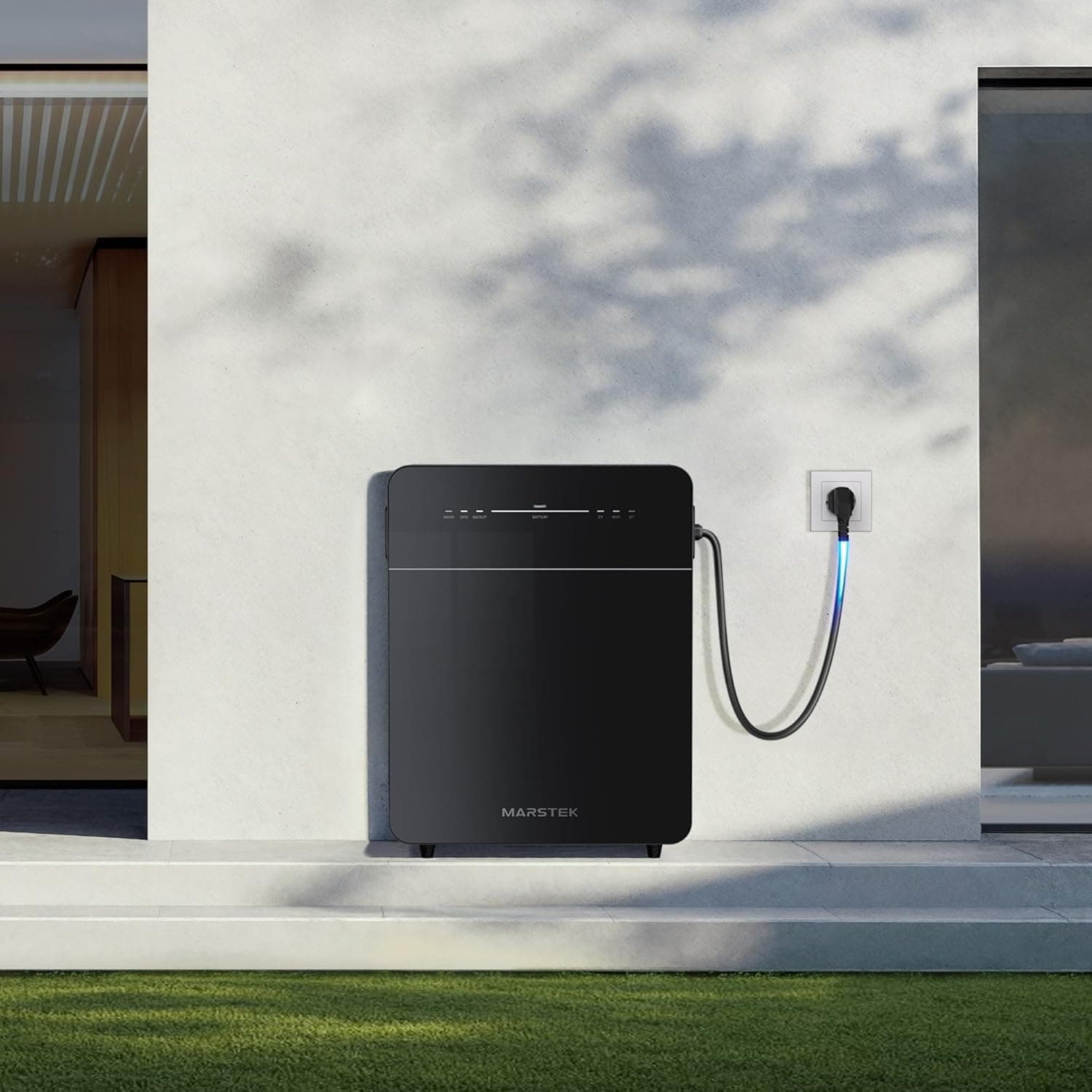
The Venus E 3.0 is interesting because it starts with a capacity that feels like a home battery rather than a large travel power station. At 5.12 kWh, it can absorb a meaningful part of a solar surplus or cover selected evening loads, while its 2.5 kW AC path keeps the system focused on realistic residential use.
MARSTEK positions the unit as an AC-coupled, all-in-one system. That matters for retrofits: you do not need to rebuild an existing photovoltaic installation just to add storage. The trade-off is that the final experience still depends on the meter, the circuit layout and what the home asks the battery to power.
Energy use
Self-consumption first, backup second
The most persuasive use case is solar self-consumption. With a compatible current sensor or smart-meter setup, the system is intended to follow household demand and reduce energy sent back to the grid. That is more useful than simply charging a battery at random: the aim is to retain solar production for later use.
It can also shift cheap electricity into expensive periods. This is attractive on dynamic tariffs, but the economics depend on the price spread, efficiency and the number of cycles. Treat the app and scheduling features as tools, not as a guarantee of savings.
Capacity and power
5.12 kWh is useful; 2.5 kW sets the boundary
Capacity answers how long energy can be supplied; power answers what can run at once. A 5.12 kWh battery can make a visible difference for a fridge, internet equipment, lights, television, office equipment and carefully managed kitchen loads. But a 2.5 kW limit means that an induction hob, oven, heat pump or several high-draw appliances can quickly become the limiting factor.
The expansion path to 15.36 kWh is therefore valuable. It gives households an option to begin at a sensible level, observe their consumption and grow later. Before expanding, check whether the inverter power and phase arrangement will still match the intended loads.
Before buying
The compatibility checklist matters more than a marketing promise
This is a product to buy after a short audit, not before it. Start with the daily solar surplus, evening consumption, peak loads and the circuits you want protected. Then verify the exact meter and current-transformer compatibility, the placement conditions, the wiring method and the rules that apply where you live.
The advertised 0% VAT condition shown on some marketplace listings is not universally applicable. It is a tax-status claim tied to a particular market and buyer situation, not a general product benefit. Confirm the conditions with the seller and, where relevant, a qualified installer or tax adviser.
Specifications
What we liked and what we didn't
Pros
- Useful 5.12 kWh starting capacity for solar shifting and essential loads
- 2.5 kW AC input and output in a compact all-in-one format
- Smart-meter mode targets self-consumption and can limit export
- LFP chemistry, IP65 rating and expansion path to 15.36 kWh
Cons
- 2.5 kW is not enough for every heavy appliance or whole-home scenario
- Real-world suitability depends on electrical compatibility and local rules
- A plug-and-play promise does not remove the need to understand backup circuits
Alternatives
Compare the right kind of backup, not only the largest battery
These alternatives cover compact essential-load backup, expandable AC-coupled storage and high-output portable systems. Compare capacity, output power, expansion and local compatibility before choosing.
 value
valueZendure
Zendure SolarFlow 2400 AC
2-5 kWh
- capacity kwh: 2-5 kWh
- inverter power kw: 2.4 kW
- expandable to kwh: 17.28 kWh
AC-coupled SolarFlow system with a 2.88 kWh AB3000X battery, 2.4 kW power management and broad expansion potential.
 premium
EcoFlow
EcoFlow DELTA Pro 3
4-8 kWh
- capacity kwh: 4-8 kWh
- inverter power kw: 4 kW
- expandable to kwh: 12 kWh
High-output 4.096 kWh LFP power station with 4 kW AC output and expansion up to 12 kWh for serious backup scenarios.
 value
valueEcoFlow
EcoFlow DELTA 2 Max
2-5 kWh
- capacity kwh: 2-5 kWh
- inverter power kw: 3.1 kW
- expandable to kwh: 6.144 kWh
2.048 kWh LFP station with up to 3.1 kW output, fast charging and a familiar ecosystem for solar-assisted home backup.
Where to buy the MARSTEK Venus E 3.0
HomeSpecLab may earn a commission on qualifying purchases.
Amazon BelgiumAffiliate linkCheck current priceSee offerAmazon FranceAffiliate linkCheck current priceSee offerHow it compares in UPS & Backup
Products in comparison
 value
valueMARSTEK
MARSTEK Venus E 3.0
4-8 kWh
- capacity kwh: 4-8 kWh
- inverter power kw: 2.5 kW
- expandable to kwh: 15.36 kWh
AC-coupled 5.12 kWh LFP home battery with 2.5 kW input/output, app control and expansion to 15.36 kWh.
valueZendure
Zendure SolarFlow 2400 AC
2-5 kWh
- capacity kwh: 2-5 kWh
- inverter power kw: 2.4 kW
- expandable to kwh: 17.28 kWh
AC-coupled SolarFlow system with a 2.88 kWh AB3000X battery, 2.4 kW power management and broad expansion potential.
premiumEcoFlow
EcoFlow DELTA Pro 3
4-8 kWh
- capacity kwh: 4-8 kWh
- inverter power kw: 4 kW
- expandable to kwh: 12 kWh
High-output 4.096 kWh LFP power station with 4 kW AC output and expansion up to 12 kWh for serious backup scenarios.