
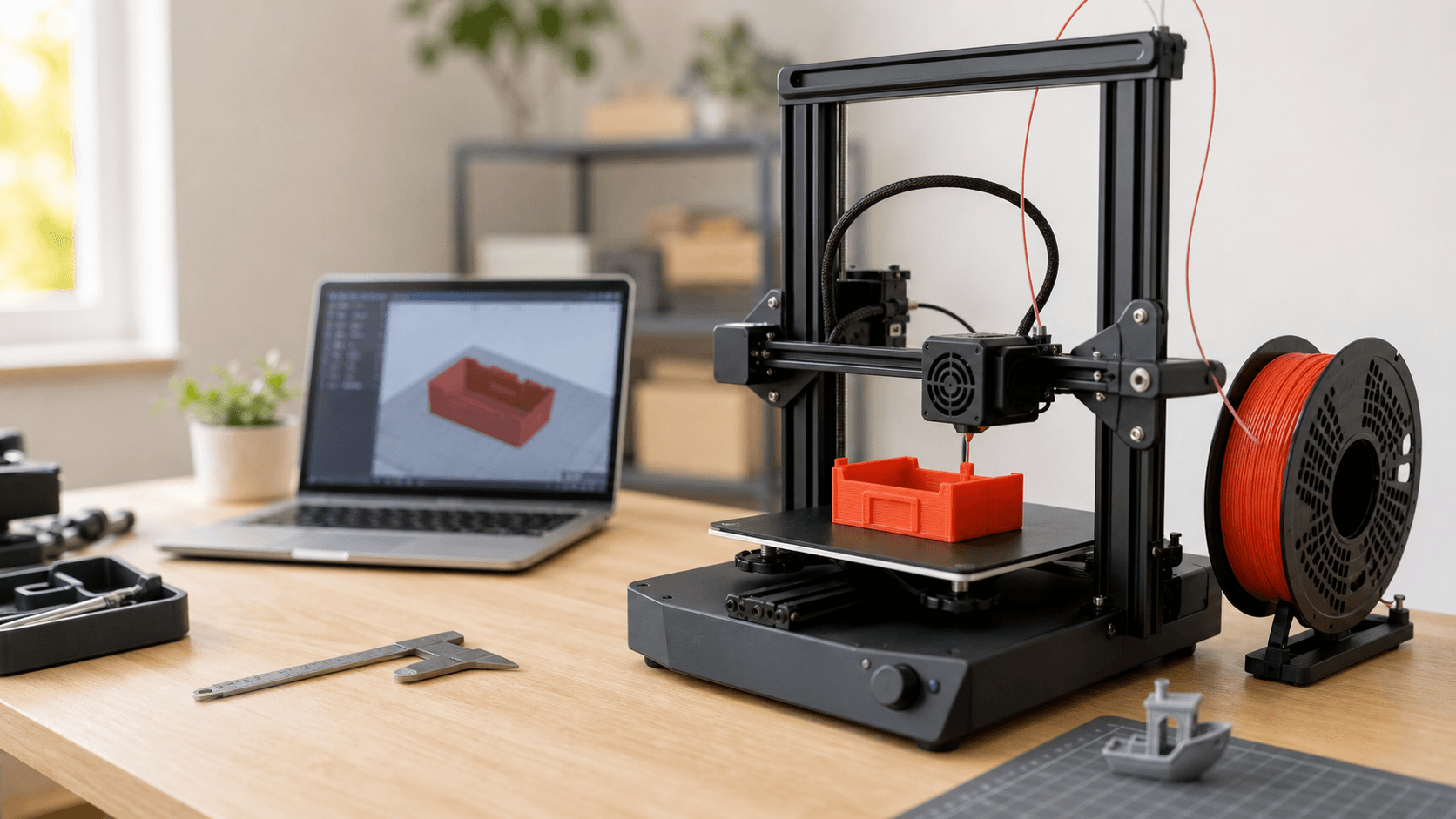
A good FDM 3D printer under 400 euros should not be chosen only by looking at maximum speed or the biggest build volume. At this price, the best choice depends on how much tinkering you accept, what materials you want to print, and whether the printer will live in a bedroom, office or garage.
For most beginners, the sweet spot is a reliable PLA/PETG printer with automatic bed leveling, a removable flexible build plate, easy filament loading and a clear path to spare parts. A very cheap printer can be tempting, but if it needs constant calibration, clogged-nozzle troubleshooting and forum hunting, the real cost becomes your time.
What FDM means and why it matters
FDM, sometimes called FFF, is the common filament-based 3D printing process. The printer melts plastic filament through a hotend and builds the part layer by layer. It is the right technology for practical home objects, brackets, organizers, replacement parts, prototypes, cosplay props and hobby projects.
Compared with resin printing, FDM is usually cleaner, cheaper to run and easier to place in a normal home. Resin can produce finer miniatures, but it involves liquid resin, gloves, washing, curing and stronger ventilation requirements. For a first 3D printer under 400 euros, FDM is usually the safer and more versatile starting point.
The features that matter under 400 euros
Automatic bed leveling is close to essential now. It does not remove every calibration problem, but it reduces the classic beginner pain point: the first layer. A flexible PEI build plate is also useful because finished prints release more easily once the plate cools.
Build volume matters, but not as much as many buyers think. A 180 x 180 x 180 mm printer can already make many useful objects. Around 220 x 220 x 250 mm is the classic comfortable format. Larger beds help for helmets, shelves and cosplay parts, but they also need more space, more stable mechanics and longer print times.
Advertised speed is another number to treat carefully. A printer may claim 500 or 600 mm/s, but real quality depends on acceleration, input shaping, cooling, filament, slicer profile and the shape of the object. A slower printer with stable profiles can be better than a fast printer that needs constant tuning.
Open frame or enclosed printer?
Most printers under 400 euros are open-frame machines. They are easier to access, cheaper and usually fine for PLA and many PETG prints. The downside is noise, drafts, exposed moving parts and less temperature control.
An enclosed printer is more comfortable in a living space and more suitable for materials that dislike drafts, such as ABS or ASA. But below 400 euros, enclosed models often involve trade-offs: smaller volume, higher price or fewer upgrade options. If you only print PLA, an open printer is usually enough.
Materials: start with PLA, then PETG
PLA is the easiest filament for beginners. It prints at moderate temperatures, warps less and works well for decorative objects, prototypes and many household parts. PETG is tougher and more heat-resistant, but stringing and bed adhesion can be trickier. TPU is flexible but slower. ABS and ASA need better ventilation and ideally an enclosure.
Before buying, check nozzle temperature, bed temperature and whether the hotend is all-metal if you plan to explore higher-temperature materials. For a first machine, however, good PLA performance is more important than a long marketing list of exotic filaments.
Noise, safety and where to place it
A 3D printer is not a normal office accessory. It moves for hours, uses a heated bed and hot nozzle, and can produce odors depending on filament. Place it on a stable surface, keep dust away from filament, avoid leaving early test prints completely unattended, and make sure the room is ventilated.
If the printer will sit near a desk or bedroom, pay attention to enclosure, fan noise and motion noise. Fast printers are not automatically quiet. For shared living spaces, a compact polished printer can be worth more than a larger but louder machine.
Our shortlist logic
For a tight budget, look at proven open-frame models with auto leveling and large communities. For a smoother first experience, prioritize Bambu Lab A1 mini or Flashforge Adventurer-style workflows. For speed and larger prints, compare Creality KE, Anycubic Kobra and Elegoo Neptune models. The best printer is not the most impressive spec sheet; it is the one you will actually use without getting discouraged.
Below you will find product ranges for Belgium and France. Belgian visitors are routed toward Amazon.com.be links, while French visitors are routed toward Amazon.fr links when available.
Product ranges
Recommended products
A practical shortlist selected for the buying criteria explained in this guide.
 budget
Flashforge
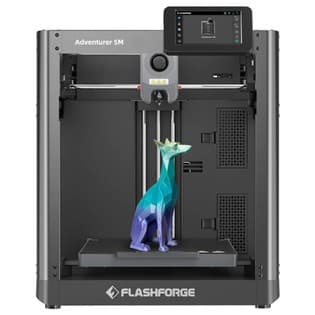
Flashforge Adventurer 5M FDM 3D Printer
- max speed: 600 mm/s
Straightforward open-frame FDM printer with automatic leveling and a 220 mm cubic build volume for rapid everyday prints.
 value
valueFlashforge
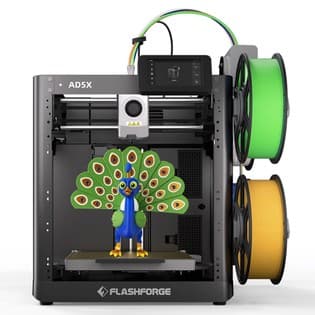
Flashforge AD5X FDM 3D Printer
- max speed: 600 mm/s
Fast, user-friendly multi-color FDM printer for makers who want a compact four-filament workflow without stepping into a large machine.
 premium
Creality
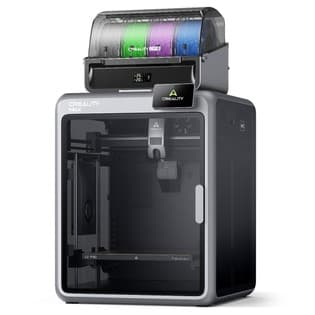
Creality K2 Pro Combo FDM 3D Printer
- max speed: 600 mm/s
Large-format Combo for multicolor projects, with a 300 mm cubic build area, CFS material handling and fast FDM printing.
 premium
Elegoo
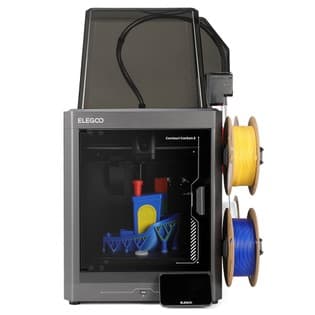
Elegoo Centauri Carbon 2 Combo FDM 3D Printer
- max speed: 500 mm/s
Enclosed CoreXY printer for makers who want 4-color prints, a 256 mm cubic build volume and high-temperature material capability.
 premium
Flashforge
Flashforge Adventurer 5M Pro
220-220
- advertised speed: 600 mm/s
- auto bed leveling
- enclosed frame
A more controlled enclosed-style choice to consider when discounts bring it near the 400 euro ceiling.
 budget
Anycubic
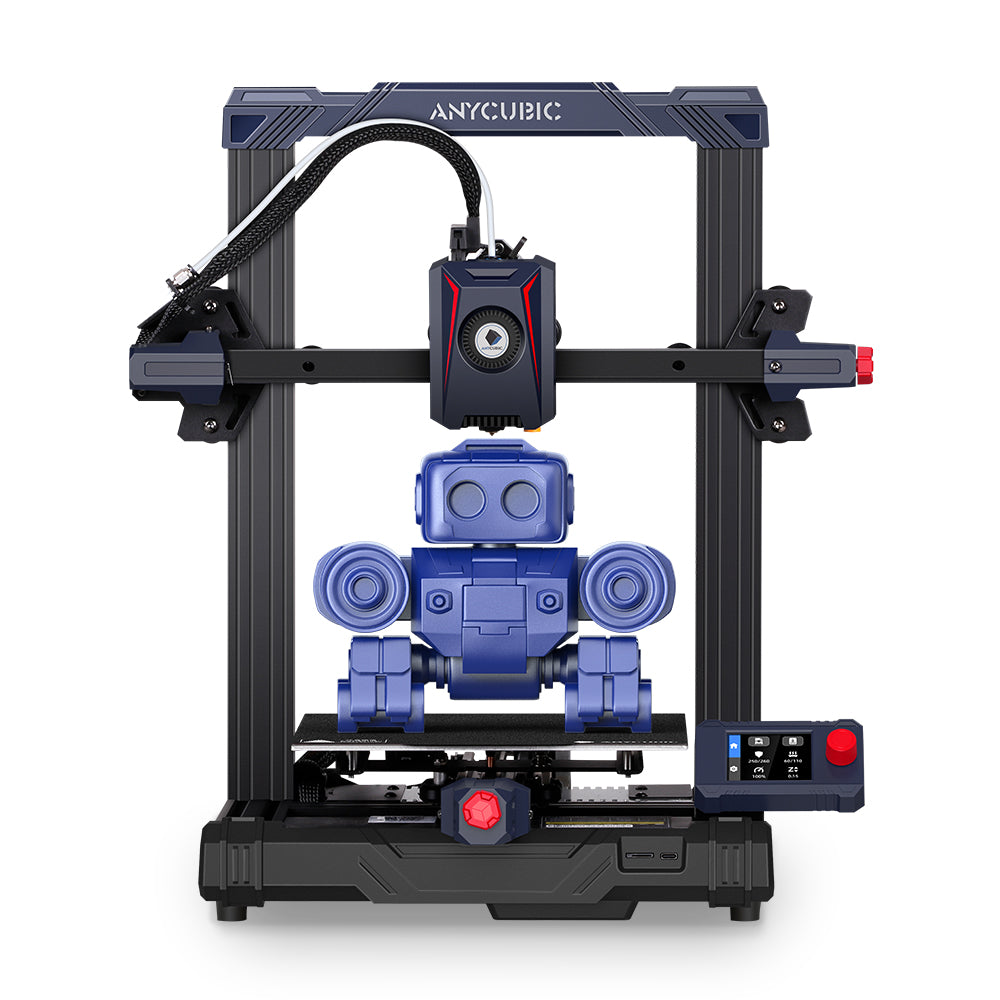
Anycubic Kobra 2 Neo
220-250
- advertised speed: 250 mm/s
- auto bed leveling
- beginner friendly
A budget-friendly FDM printer for buyers who want simple PLA printing without paying for premium extras.
Product ranges
Useful ranges mentioned in this guide
 budget
Creality
Creality Ender-3 V3 SE
220-250
- advertised speed: 250 mm/s
- auto bed leveling
- beginner friendly
A popular low-cost FDM printer for beginners who want auto leveling, a practical build volume and a large community.
 value
valueCreality
Creality Ender-3 V3 KE
220-240
- advertised speed: 500 mm/s
- auto bed leveling
- beginner friendly
A faster Ender variant for buyers who want more speed and convenience while staying below the 400 euro mark.
 value
valueBambu Lab
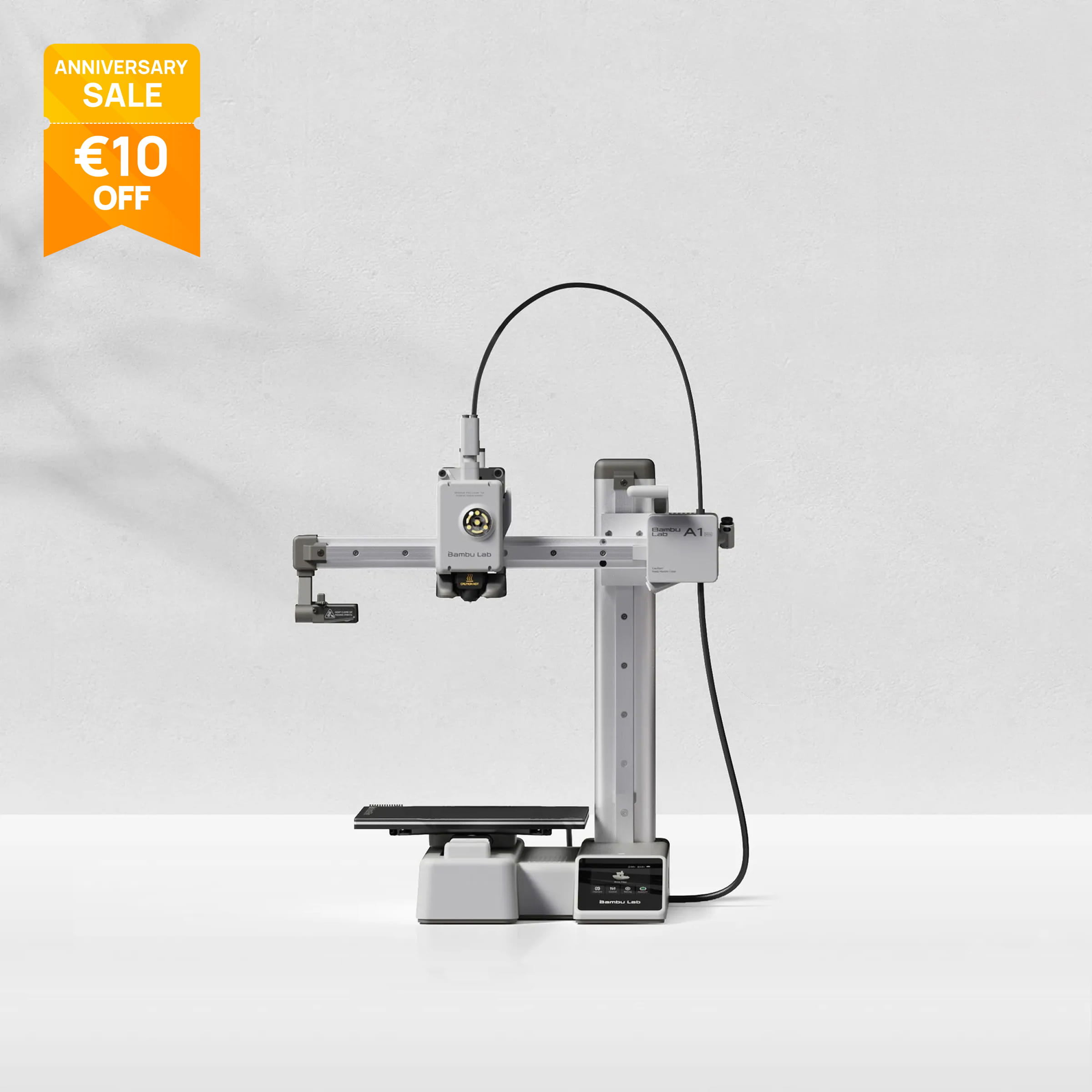
Bambu Lab A1 mini
180-180
- advertised speed: 500 mm/s
- auto bed leveling
- beginner friendly
A compact beginner-friendly FDM printer known for ease of use, polished workflow and reliable small-format prints.
 value
valueFlashforge
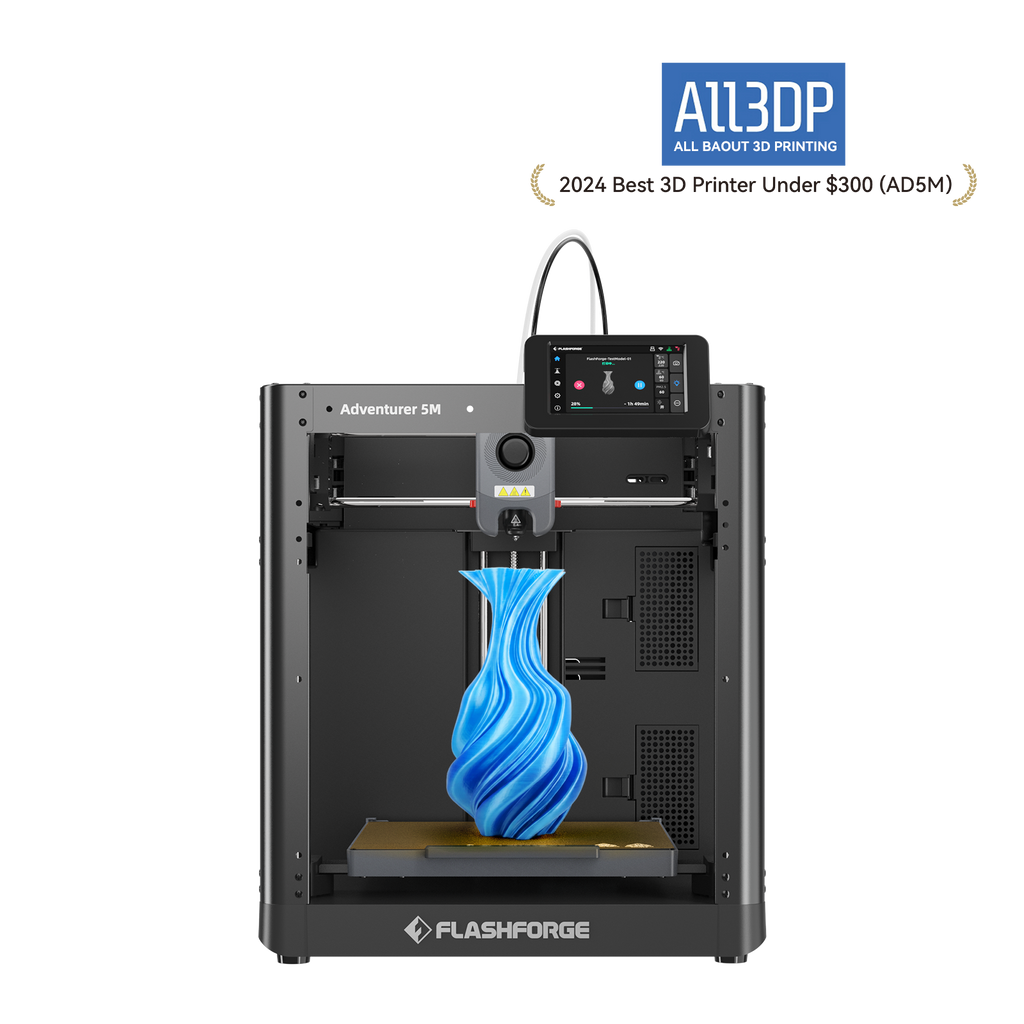
Flashforge Adventurer 5M
220-220
- advertised speed: 600 mm/s
- auto bed leveling
- beginner friendly
A speed-focused printer with a more polished out-of-box experience than many classic open-frame kits.
Quick answers
What is the best first 3D printer under 400 euros?
For most beginners, choose an FDM printer with auto bed leveling, a flexible PEI plate and strong community support. Bambu Lab A1 mini, Creality Ender-3 V3 SE/KE and Flashforge Adventurer 5M-style machines are common shortlist candidates.
Is an enclosed 3D printer necessary?
Not for PLA. An enclosure helps with drafts, noise and materials such as ABS or ASA, but many users can start with an open-frame printer and PLA.
Should I buy the fastest printer?
Not automatically. Real print quality depends on acceleration, slicer profiles, cooling and mechanics. A stable printer with good profiles can beat a faster but less polished machine.
Related buying tools
Continue with the most relevant calculator or guide.
HomeSpecLab works best when calculators, buying guides and product picks reinforce each other. Use these links to move from sizing to shopping criteria.