
Start with the room, not the box
A portable air conditioner should be sized around the room you actually want to cool. A small bedroom may only need a compact unit, while a sunny living room or open-plan space needs more BTU and better airflow. Oversizing is not always better: it can be louder, heavier and less comfortable.
Check the exhaust setup
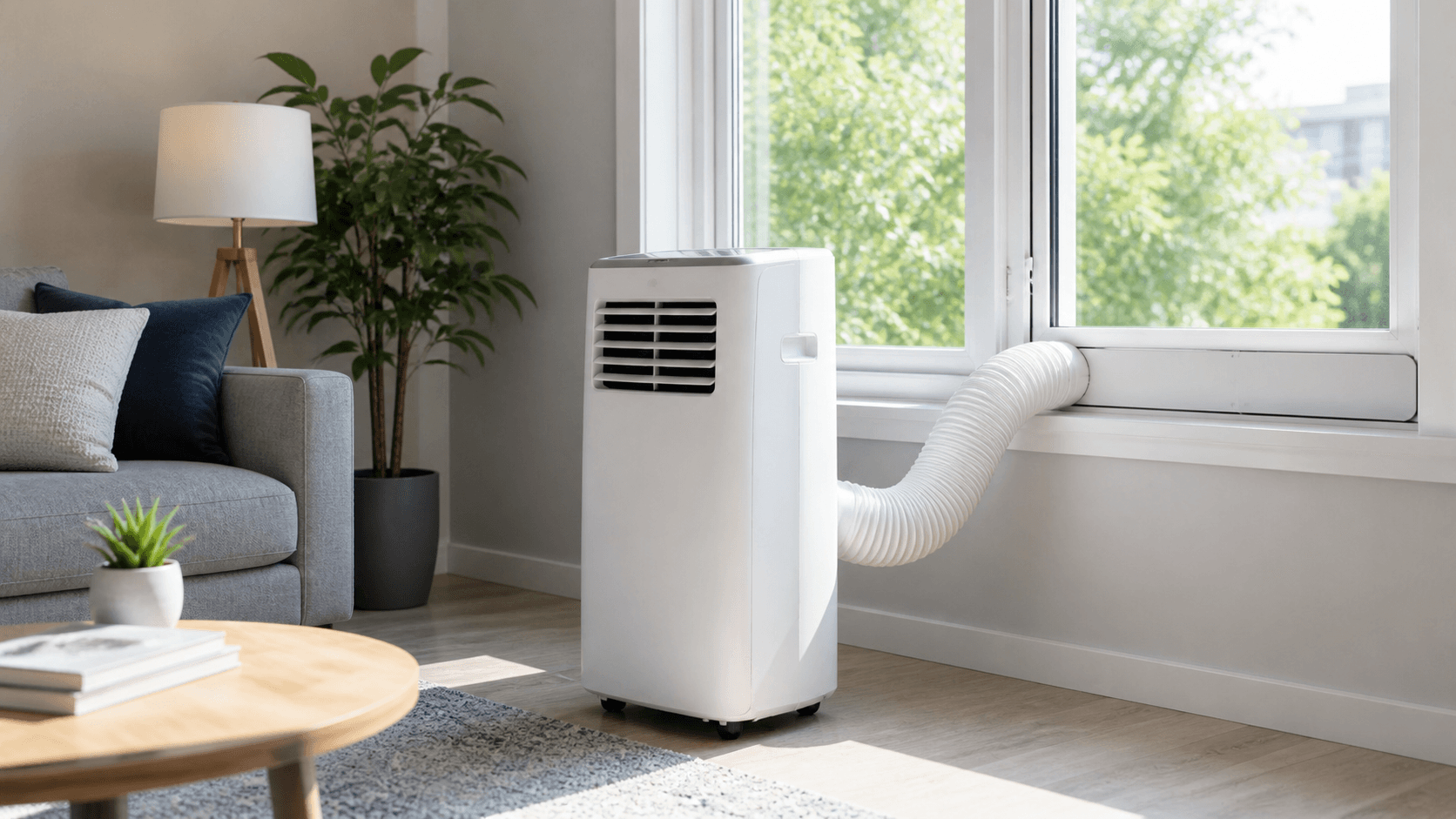
Most portable AC units need a window kit and an exhaust hose. Before buying, check whether your window type can seal properly. Poor sealing lets warm air back in and makes even a powerful unit feel disappointing.
Noise matters at home
For bedrooms and home offices, noise level can matter as much as cooling capacity. Look for sleep mode, lower fan settings and realistic user reviews. If the unit will run near a bed, a slightly smaller and quieter model can be a better choice than the biggest one.
Useful features
Remote control, timer, dehumidifier mode, washable filters and Wi-Fi can make daily use easier. Drainage is also important: some units need occasional emptying, especially in humid weather.
Quick advice
Use 9,000 BTU for smaller rooms, 12,000 BTU for medium rooms and more only when the space is large, sunny or poorly insulated. Then compare noise, hose kit, size and energy use before choosing.
Quick answers
How should I compare products?
Start with the main sizing criterion, then compare noise, installation, maintenance and long-term convenience.
Are these recommendations final advice?
No. They are practical shopping guidance. Check the exact product sheet and your home constraints before buying.
Related buying tools
Continue with the most relevant calculator or guide.
HomeSpecLab works best when calculators, buying guides and product picks reinforce each other. Use these links to move from sizing to shopping criteria.