
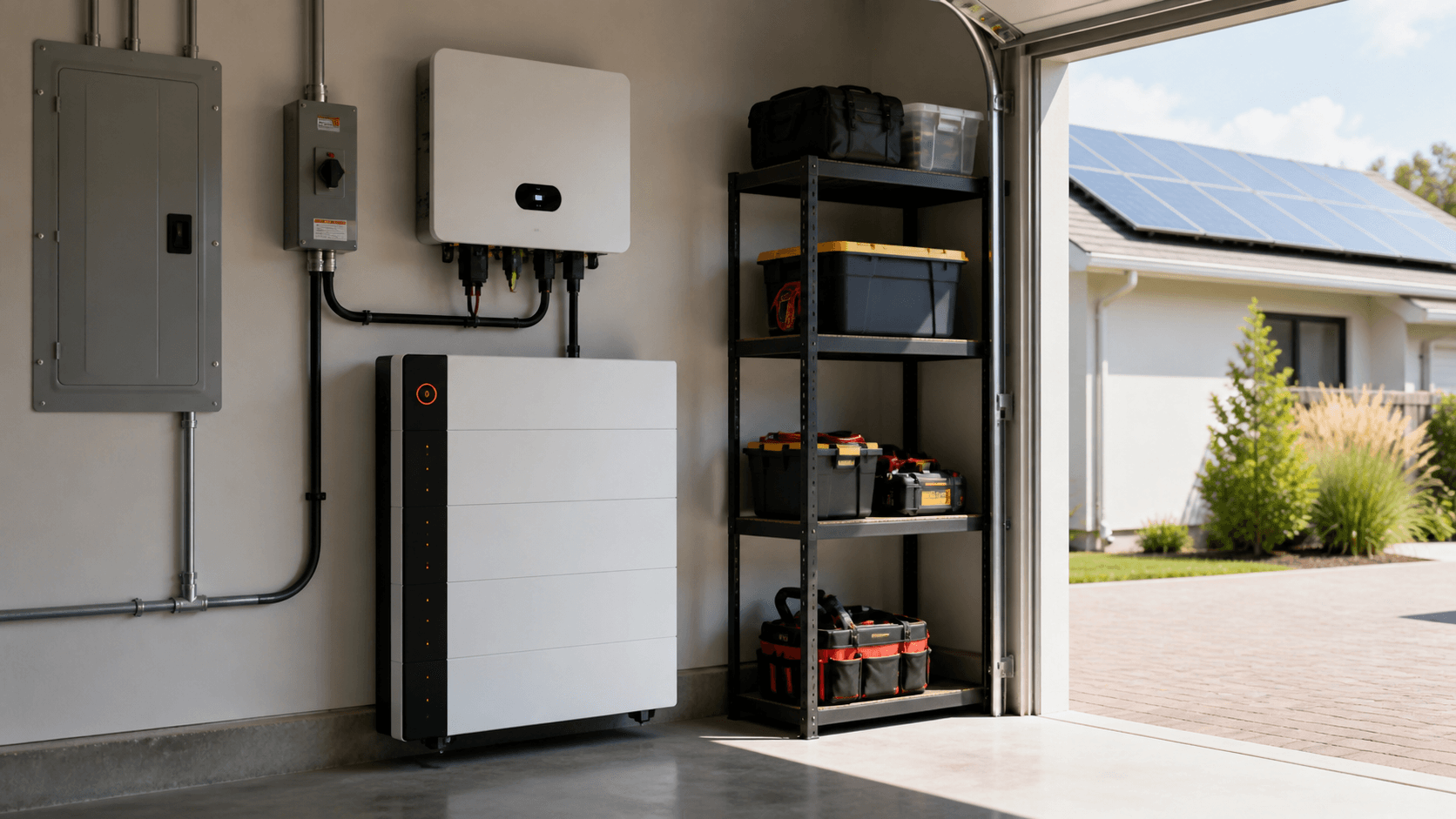
A home battery is not only a large box of energy. The right choice depends on daily consumption, solar production, backup needs and the inverter power required by the appliances you want to run.
Start with useful capacity
Battery capacity is usually expressed in kWh. A small 3-5 kWh battery can cover evening self-consumption for a modest home. A 5-10 kWh system is a common middle ground. Larger 10-15 kWh and 15-25 kWh systems make more sense for heat pumps, electric vehicles, whole-home backup or large solar arrays.
Do not ignore inverter power
Capacity tells you how long the battery may last. Inverter power tells you what it can run. Fridges, lights and internet can work with a modest inverter. Heat pumps, induction hobs, ovens, boilers and EV charging require much stronger systems and can drain the battery quickly.
Solar panels change the value
A battery can work without solar panels for backup or dynamic tariffs, but the financial case is usually stronger when it stores excess solar production. If you already have solar panels, compare the battery size with your daily surplus rather than only your annual consumption.
Backup: essentials first
Whole-home backup is possible, but it is often expensive and installation-dependent. For many homes, an essential-load setup for the fridge, lights, internet, boiler controls and home office is more realistic and easier to size.
Quick recommendation
Use the calculator first. Then compare products by kWh capacity, inverter kW, expandability and solar compatibility. Installation rules vary by country and electrical setup, so confirm the final design with a qualified installer.
Product ranges
Recommended home batteries
A few matching picks from the home battery catalog, selected for capacity, inverter output and solar or backup use.
 value
valueJackery
Jackery Explorer 2000 v2
2-5 kWh
- capacity kwh: 2-5 kWh
- inverter power kw: 2.2 kW
- expandable to kwh: 2.042 kWh
Portable 2.042 kWh LFP station with 2.2 kW output and fast charging for backup, travel and detached spaces.
 budget
Anker
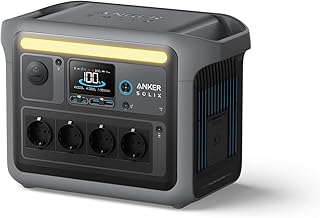
Anker SOLIX C1000
1-2 kWh
- capacity kwh: 1-2 kWh
- inverter power kw: 1.8 kW
- expandable to kwh: 2.112 kWh
Compact 1.024 kWh LFP backup station with 1.8 kW output, best suited to essential loads, portable use and shorter outages.
 value
valueEcoFlow
EcoFlow DELTA 2 Max
2-5 kWh
- capacity kwh: 2-5 kWh
- inverter power kw: 3.1 kW
- expandable to kwh: 6.144 kWh
2.048 kWh LFP station with up to 3.1 kW output, fast charging and a familiar ecosystem for solar-assisted home backup.
 premium
EcoFlow
EcoFlow DELTA Pro 3
4-8 kWh
- capacity kwh: 4-8 kWh
- inverter power kw: 4 kW
- expandable to kwh: 12 kWh
High-output 4.096 kWh LFP power station with 4 kW AC output and expansion up to 12 kWh for serious backup scenarios.
 value
valueZendure
Zendure SolarFlow 2400 AC
2-5 kWh
- capacity kwh: 2-5 kWh
- inverter power kw: 2.4 kW
- expandable to kwh: 17.28 kWh
AC-coupled SolarFlow system with a 2.88 kWh AB3000X battery, 2.4 kW power management and broad expansion potential.
 value
valueMARSTEK
MARSTEK Venus E 3.0
4-8 kWh
- capacity kwh: 4-8 kWh
- inverter power kw: 2.5 kW
- expandable to kwh: 15.36 kWh
AC-coupled 5.12 kWh LFP home battery with 2.5 kW input/output, app control and expansion to 15.36 kWh.
Quick answers
What is the most important number?
Capacity in kWh and inverter power in kW must both match your use case.
Is solar required?
Not always, but solar usually makes the battery more useful for savings and self-consumption.
Related buying tools
Continue with the most relevant calculator or guide.
HomeSpecLab works best when calculators, buying guides and product picks reinforce each other. Use these links to move from sizing to shopping criteria.